
Phones20 July 2026
Missed-call textback: why tradies lose jobs to the second phone call
Homeowners ring the Google results in order until someone answers. Missed-call textback keeps you in the running from the roof.
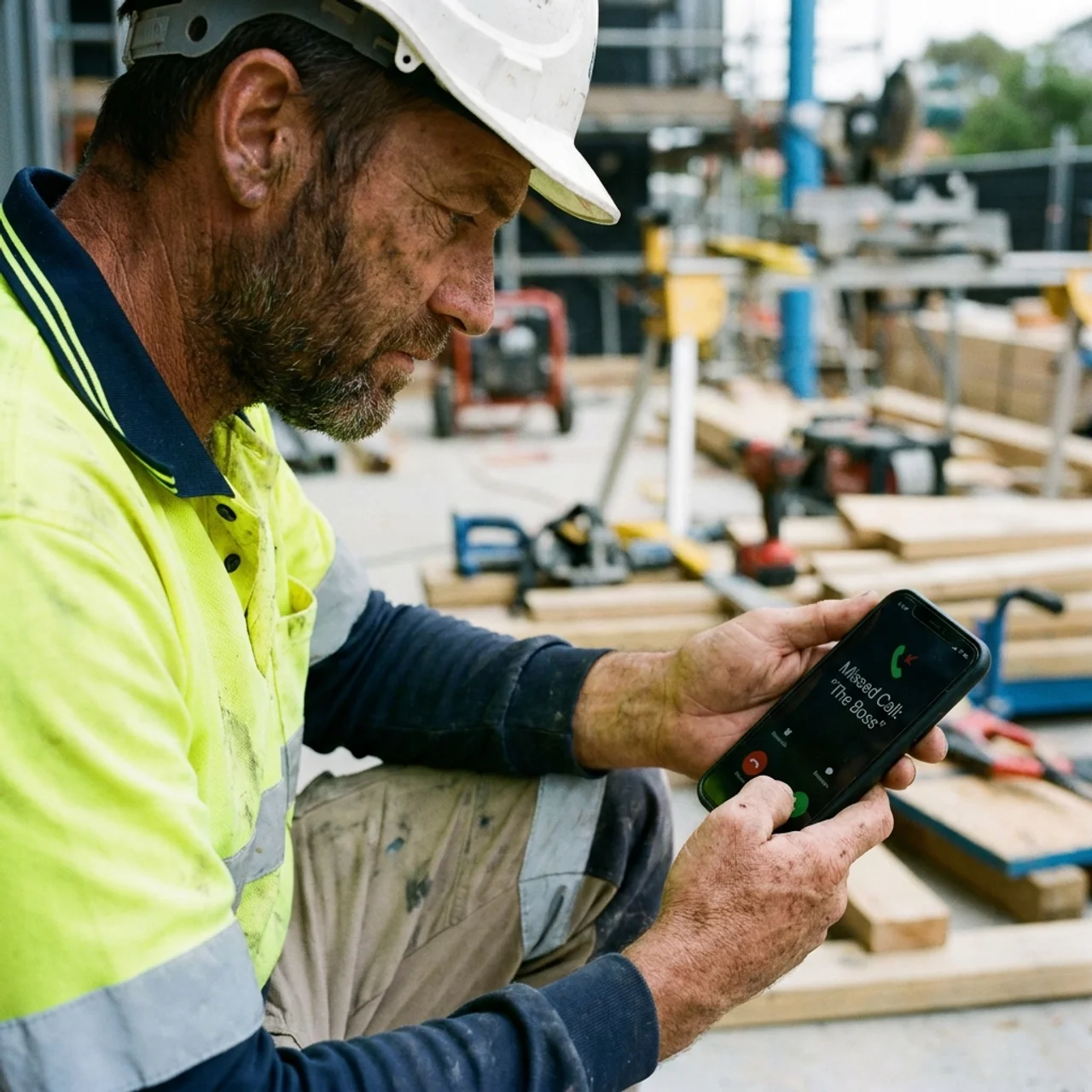
Monday, 7:40am. A sparky is up in a roof cavity in Kingscliff, torch in his teeth, phone sitting on the dash of the ute two storeys down. Monday morning is exactly when his phone runs hottest, and it is also exactly when he cannot answer.
By smoko there are three missed calls from unknown numbers and not one voicemail. He rings the first back at 9:30 and gets a cheerful "no worries mate, someone's already coming this arvo." The other two never answer his callback at all.
Nothing about his work failed. His phone did.
Why doesn't calling back at smoko work?
Most tradies genuinely believe the callback system works. Ring everyone back at smoko, or at knock-off, and the good jobs will still be there. Ask the homeowner on the other end of the phone and a different picture emerges. Picture the woman who rang our sparky at 7:40. She did not shortlist and wait. She worked down the Google results, ringing one business after another until somebody picked up, then stopped.
Which means the window is minutes, not hours. A homeowner with a burst flexi hose flooding the laundry is not comparing three quotes. She is committing to whoever removes the uncertainty first, and she will often pay more for the one who answered. By the time the plumber crawls out from under the house, the $800 emergency job belongs to the next listing, and he never knew the call was worth anything.
Voicemail does not catch these people either. According to Invoca, fewer than 3 per cent of callers who get pushed to voicemail leave a message. A missed call with no voicemail is not a wrong number. It is usually a job that went somewhere else.
Nor is this a small operator problem. Forbes Australia reports that Jim's Group knocked back roughly a quarter of a million leads in a year, names unreturned sales leads as its most common franchisee problem, and built an automated system that texts a franchisee two hours after a missed call and, at four hours, plays Jim Penman's recorded voice telling them to make the call. The biggest trade services brand in the country could not rely on people ringing back on their own, so it automated the reminder. Missed-call textback takes the same idea one step earlier, to the customer's phone, in the first minute.
Price the leak honestly. If your average job is worth a few hundred dollars and a handful of unknown numbers ring out each week, that is thousands of dollars a month leaving quietly. It never shows up as a lost quote. It only shows up as silence.
How does missed-call textback actually work?
The mechanics are simple. Your inbound number sits behind a system that notices when a call goes unanswered, gets declined, or arrives after hours. Within about 30 to 60 seconds it sends the caller a text, while they are still holding the phone and before they have dialled the next result.
The message does three things, in plain language:
- It identifies your business by name, so it reads as you and not a random number.
- It acknowledges the missed call honestly. "Sorry I missed you, I'm on the tools" is the truth, and customers respect it.
- It asks one useful question: what is the job, and what suburb. For emergency trades it adds an urgency check, along the lines of "if it's urgent, reply URGENT and I'll ring you straight back."
Replies land in a two-way inbox that you, or whoever handles your office work, can deal with between jobs. So when you do ring back at smoko, you are not cold calling a stranger who has moved on. You are ringing someone who has already told you the job, the suburb and the urgency, and who is expecting your call.
The text also survives the thing that quietly kills more leads than almost anything else: phone tag. A tradie returns an 11:45am missed call at 6:30pm from the driveway. The homeowner is mid dinner and bath time and does not pick up. Neither side tries again, and the job dies with both of them assuming the other one dropped it. A text does not care what time it is. It sits there until it is answered.
What changes for the business
The first change is that unknown numbers stop being a liability. Plenty of tradies now screen anything that is not a saved contact, because the last month of calls was scam after scam about suspended ABNs and undelivered parcels. The trouble is that every new lead, by definition, rings from an unknown number. The screening habit lets your mates and existing clients through and filters out the paying work. With textback running, you can keep screening. The lead still gets an immediate, professional response either way.
The second change is what your smoko actually produces. Instead of burning the break returning three calls, reaching one voicemail and one "already booked", you scan a few replies that already contain the job details and ring the one worth ringing. The same fifteen minutes converts more work.
Some tradies worry the automatic text will read as spam, given how much scam SMS Australians receive. In practice the opposite holds, because the message arrives seconds after the customer rang you, names your business, and talks only about their call. It is a reply, not a broadcast. Under Australian spam rules, responding to an inbound call with an identified, transactional message sits comfortably within inferred consent, and we set the sending route up properly so the messages reliably deliver.
At Tradie Drive we install missed-call textback as part of a connected setup rather than a standalone gadget. It pairs naturally with instant quote response, which does the same job for enquiries that arrive through your website instead of your phone. You can see how the pieces fit together in our systems overview.
What it doesn't fix
An honest limit first: the text buys you minutes to hours, not the job. If a customer replies with the details and nobody ever goes back to them, the lead dies exactly as it would have without the system, so textback is a bridge to a real conversation, not a substitute for one. It cannot text a landline, which means a portion of older callers still need an old fashioned callback. Without sensible filtering it will also text your supplier, your mum and the client you are standing in front of, which is why we configure known contacts and current jobs out of it rather than switching it on raw. Replies landing in a platform inbox instead of your normal messages is a real risk if that inbox goes unwatched, the exact leak we cover in the unified inbox. And if you are booked six months out and happy at your current size, this will not feel urgent. It becomes urgent the day you want better jobs, or the day the market cools.
The next step
If missed calls are the leak in your week, this is one of the quieter, cheaper fixes available. Get in touch and we will look at your actual call patterns together. If textback will not move the needle for your business, we will tell you that too.
All resources