
AI20 July 2026
AI chat on your website: what it can and can't do for a trade business
The 10:30pm enquiry your website either captures or loses. An honest look at AI chat for trade businesses.
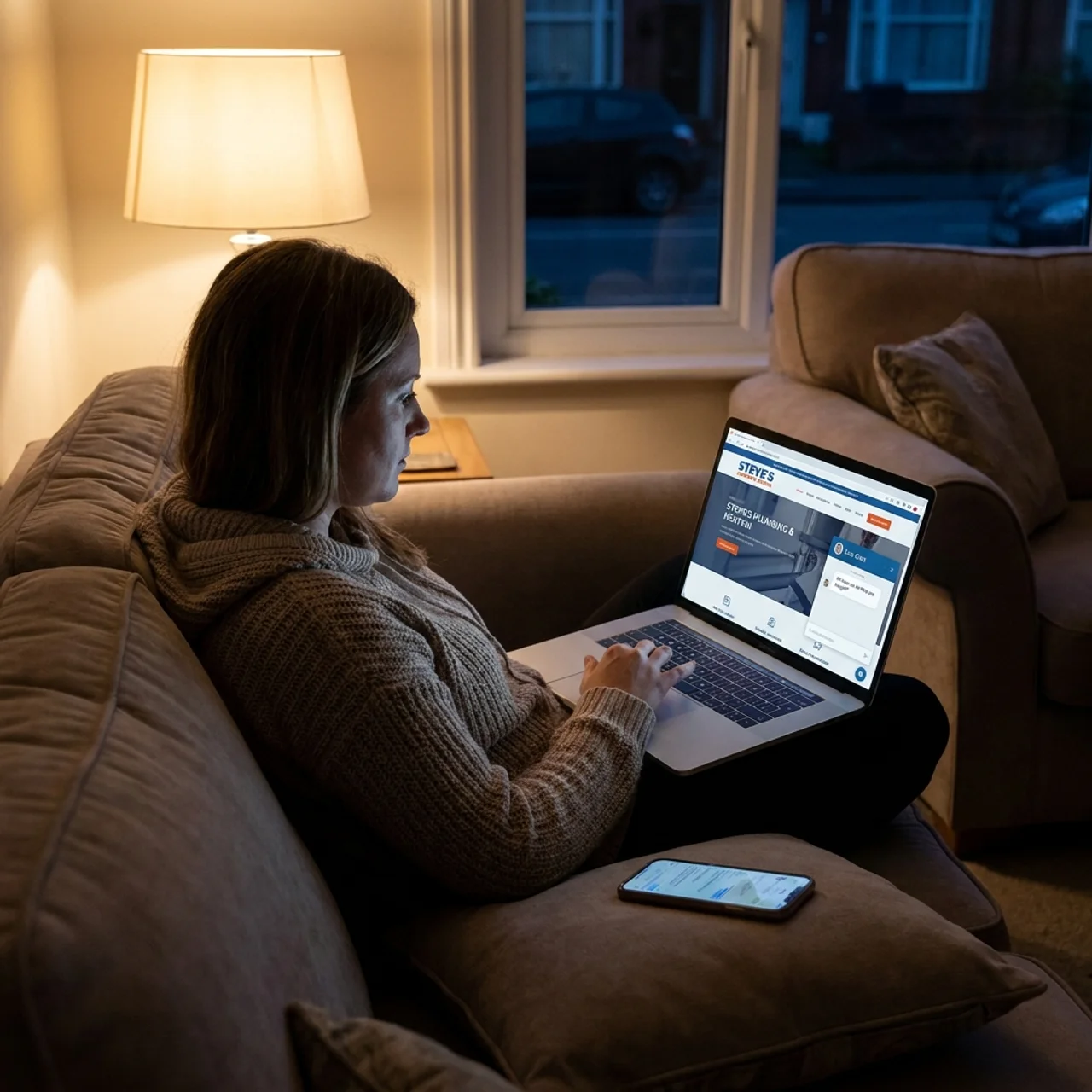
A hot water system gives out in Penrith at half past ten on a Tuesday night. The homeowner stands in the laundry with a torch, searches for an emergency plumber, and opens the first three websites Google offers her. Two have a contact form and a phone number that rings through to voicemail. The third has a chat window that answers her two questions, whether the business covers her suburb and roughly what a replacement costs, then takes her name, her mobile and a photo of the dead unit.
Nobody got out of bed. By six the next morning, one of those three plumbers has a qualified job sitting on his phone as a text message, with a suburb, a description and a photo. The other two have nothing, and they will never know the enquiry existed.
The real problem is where you are when the phone rings
Every tradie knows the daytime version of this. You are in a roof cavity, under a house, or elbow deep in a switchboard, and the phone is in the ute. By smoko there are six missed calls and maybe one voicemail. The rest have already rung the next number on the list, because that is what people do now. They do not wait, and most of them will not leave a message.
The after-hours version is quieter and costs more, because there is no missed call to see. Someone planning a bathroom renovation sits down at nine at night and works through a shortlist of local websites. If yours cannot answer a basic question or take her details, you were never in the running, and no record of it exists. Speed decides these jobs. A well-known US study of online sales leads found the odds of qualifying an enquiry drop 21 fold when the response stretches from five minutes to half an hour. We cover that effect in more detail in our article on speed to lead.
What does AI chat actually do on a trade website?
In plain English, it is a chat window wired to your phone. We load it with the facts of your business: the services you offer, the suburbs you cover, licence and insurance details, your hours, and the indicative price ranges you are comfortable putting in front of people. That is all it draws on. It cannot invent services you do not do, and it will not promise work in suburbs you do not go to.
Most visitors ask a version of the same five questions. Do you do this kind of work. Do you cover my area. Roughly what does it cost. When could you come. Are you licensed and insured. The chat answers those from your real information, at any hour, in a normal tone. Then it does its actual job, which is capture. It asks for a name, a mobile number, the suburb and a short description of the work, and invites photos where they would help.
The part that matters most is what happens next. The enquiry does not sit in a dashboard waiting for you to log in. It lands on your phone as a text within seconds, with everything the visitor said. You read it at smoko or at knock-off and reply when it suits you. We pair the chat with missed-call textback, so an unanswered call gets the same treatment: the caller receives a text within about a minute asking what the job is, and a dead voicemail becomes a conversation you can hold from the ute.
Will my customers just hang up on a bot?
It is a fair question, and we take it seriously. Most people's experience of chatbots comes from telcos and banks, where the bot exists to keep you away from a human. Research by Five9 found three quarters of consumers still prefer dealing with a real person. We do not argue with that. We build around it.
The version that fails is the one that tries to replace you. Put a robot in front of your phone line and pretend it is you, and callers hang up, older customers especially, and a lot of good trade work comes from older customers. The version that works treats the AI as a net, not a closer. It answers the simple questions, takes the message properly, and gets out of the way so a human can ring back fast. Your phone number stays visible on every page, because someone with water coming through the ceiling should be calling you, not typing to a widget. The chat exists for everyone who was never going to call at ten at night, and for every call you physically could not take.
What changes when it's running
The practical difference shows up in the gaps of the week. A chippy two weeks deep on a deck build lets everything go to voicemail, and renovation enquirers do not leave voicemails. With chat on the site, the weekend quietly collects two bathroom enquiries, one with photos and a postcode, and he rings both from the ute at knock-off on Monday. Saturday arvo at the kids' footy, the phone stays on silent while the chat fields the usual questions and pushes through the two enquiries that are actual jobs.
A few things change at once:
- After-hours enquiries become morning text messages instead of nothing.
- The same five questions get answered every time without you touching the phone.
- Every callback starts halfway done, because the name, suburb, job description and photos are already in hand.
- There is nothing new to check. Leads come to you by SMS, where you already live, not through another app or inbox.
AI chat is one of the systems we build for trade businesses, and it does its best work alongside missed-call textback and a website that actually earns enquiries in the first place.
What it doesn't fix
An honest list. The chat cannot quote sight-unseen, and it should not try. No system can tell a two hundred dollar washer from a two thousand dollar pipe reroute through a text box, so ours only ever gives ranges and hands the pricing conversation to you, because a wrong ballpark creates an angry customer before you have met them. It captures nothing on a website nobody visits. If your site does not earn traffic, that problem comes first, and we would say so. The speed advantage belongs to your callback, not the widget. A lead captured at nine at night still goes cold if nobody goes back to them by mid-morning. Genuine emergencies still need a visible phone number and a human answer. And the business facts behind the chat need maintaining as your prices and service area change. It is a system you run, not a switch you flick once.
If enquiries are reaching your website at hours you cannot answer, or the phone is costing you jobs while you are on the tools, this is a solvable problem. Get in touch and we will show you how the chat would answer for your business, using your services, your suburbs and your prices. If it is not the right fit for where your work actually comes from, we will tell you that too.
All resources