
Bookings20 July 2026
Appointment reminders: the real cost of a no-show
The empty driveway at 7am costs more than fuel. How a day-before text quietly removes the most common kind of no-show.
A sparky on the Tweed Coast books a switchboard upgrade a fortnight out. On the morning, he leaves home at 6:20 to beat the highway traffic and pulls up at 7 on the dot. The front gate is locked. A dog is going off somewhere behind the fence. He knocks, leans on the doorbell, rings the customer's mobile and listens to it ring out. It is raining.
He sits in the ute until 7:25, then drives off. His next job is not until 9:30, on the other side of town. The customer was not dodging him and had not cancelled. They booked two weeks ago, life happened, and they forgot. In the entire fortnight between the booking and the knock on the door, nobody sent a single message to confirm the appointment still existed.
That is what most no-shows are. Not rudeness, and usually not tyre kicking. Just an appointment that lived in two people's memories and nowhere else.
What does a no-show actually cost?
Ask tradies about no-shows and the word that keeps coming up is time, not fuel. A no-show burns a booked window that could have held paying work. Australian cost guides put standard plumber call-out fees at roughly $60 to $150, with hourly rates between $80 and $180 (What's The Damage). Add the drive to a dead address and a two hour gap that cannot be refilled at short notice, and one empty driveway is easily $200 to $400 of work that never happened, gone before smoko. Worse, it tends to land in the best slots. First job of the day and Saturday morning are exactly when customers like to book quotes, so that is where the no-shows cluster.
There is a second cost that is harder to see. On the forums where tradies and homeowners argue about this, both sides say almost the same thing. Tradies describe turning up on time to an empty house and never hearing another word. Homeowners describe a day wasted waiting with no courtesy call. Each side is certain the other is the flaky one. And homeowners now put it in writing. The one-star review that really hurts a trade business rarely mentions workmanship. It says the tradie did not show and did not respond. Reliability is what gets reviewed, which means the operator who confirms and turns up quietly wins work from better tradesmen who do not. We cover how that momentum builds in the five-star review engine.
Why doesn't anyone just send the text?
The fix has never been a mystery. Homeowners on those same forums say it plainly: confirm the day before. A text takes seconds to send and seconds to read. Both sides already believe in confirmations. Almost nobody systematises them.
The reason is mechanical, not attitudinal. At 4:30 in the afternoon, when tomorrow's confirmations ought to go out, a tradie is elbow deep in a ceiling cavity or driving between jobs with the phone sitting in the ute. Sending five texts is a small task, but it is a small task that has to happen every working day at the exact hour when hands are on tools. That is not a discipline problem. It is a job for a machine, because the reminder has to fire without anyone touching a phone.
How the reminder system works
The appointment reminder system we install hangs off the booking record. When a job goes in the calendar, whether it arrived through the website form or a phone call that gets logged, the customer's mobile number is captured and a short sequence attaches itself to the appointment date.
- An instant confirmation text the moment the booking is made, with the date and the arrival window, so the appointment exists somewhere other than two memories.
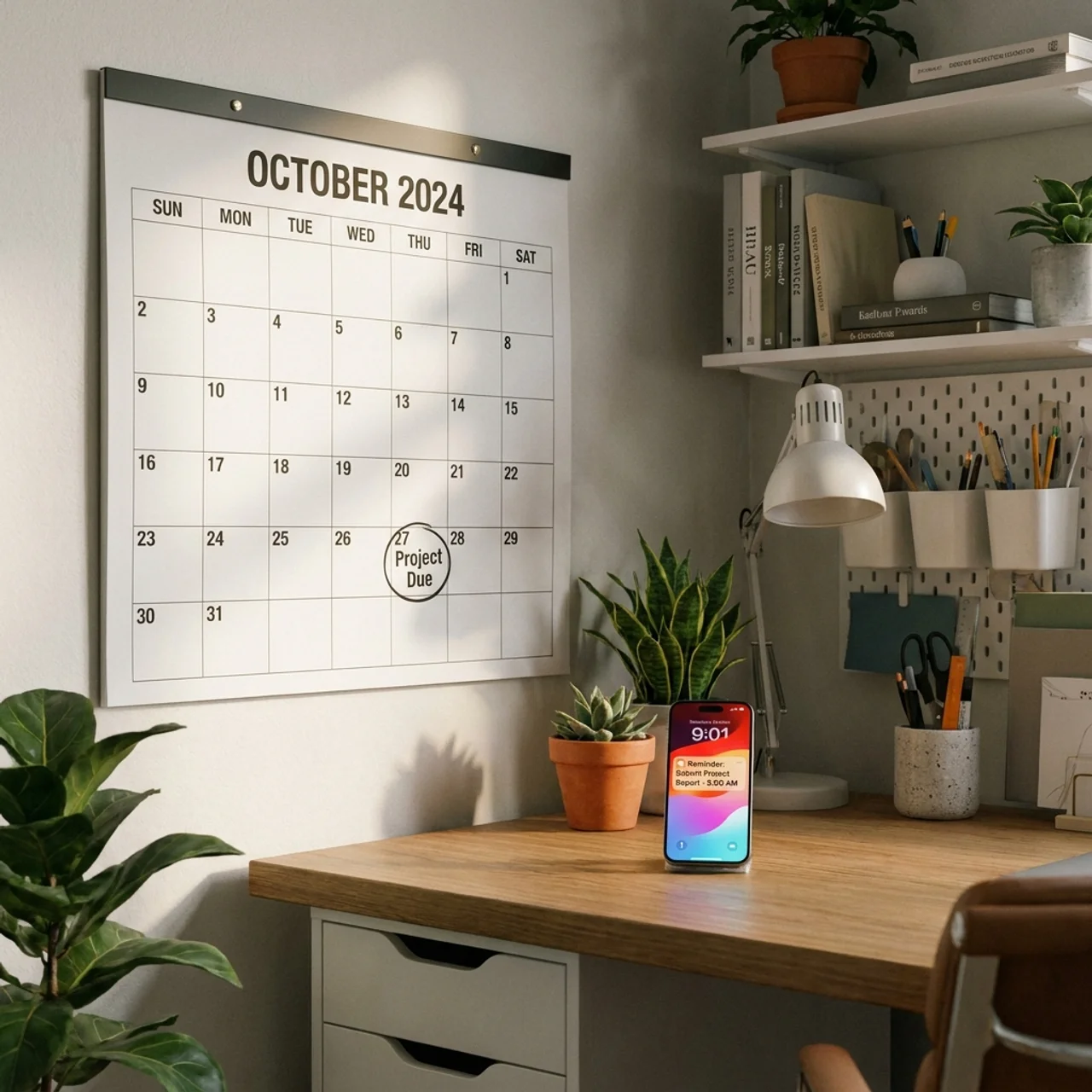
- A day-before reminder in the late afternoon. Something like: we will see you at 9am tomorrow to look at the deck, reply Y to confirm or call if anything has changed. Access instructions ride along with it, such as the gate code, putting the dog away, or letting a tenant know a plumber is attending between 9 and 11.
- An on-the-way message on the morning itself, sent when you tap one button as you leave the previous job, so the customer knows the window is real and stays put.
Replies come back as ordinary texts to a real mobile number, so a customer who needs to move the job can simply say so. Nobody in the business has to remember anything. The evidence for this kind of nudge is old and unglamorous. Across a systematic review of 29 studies, appointment reminders cut non-attendance by roughly a third of the baseline no-show rate (Hasvold and Wootton). That research comes from healthcare rather than the trades, but the failure it fixes is identical. People forget appointments they made weeks ago.
What changes for the business
The obvious change is fewer empty driveways. The switchboard customer gets a text at 5pm and replies that the side gate will be unlocked. The tenant knows a plumber is coming and shuts the dog inside. The Thursday arvo quote that was agreed over the phone and scribbled on the notepad on the dash now exists in writing on two phones instead of in two fading memories.
The less obvious change is that cancellations move earlier. Some tradies worry that a reply Y text hands the customer an easy way out. It does, and that is the point. A cancellation at 5pm the night before is a slot you can refill with the next job on the list. A no-show at 7am is not. The reminder does not stop people cancelling. It moves the cancellation to a time when it costs you almost nothing.
It also defuses the spiral where both sides no-show each other. When the morning job runs over by two hours, the on-the-way message tells the 1pm customer the truth before they give up and leave for school pickup. The same plumbing works in both directions, and it is often the difference between a rough day and a one-star review.
Reminders sit alongside the rest of the machinery we build for trade businesses, listed in the systems section of our homepage. The closest relative is missed-call textback, which catches the caller you could not answer before they ring the next number on Google. We wrote about that in missed-call textback: why tradies lose jobs to the second phone call. One system protects the enquiries coming in. This one protects the appointments already booked.
What it doesn't fix
A text does not fix a tyre kicker. Reminders remove the no-shows caused by forgetting, which in our experience is the most common kind, but they do nothing about intent. A serial time waster will reply Y on Wednesday and still not be home on Thursday. Experienced tradies already run their own defences here, such as asking a dozen questions on the phone before agreeing to quote, or taking a refundable call-out fee, and the reminder system slots in beside that screening rather than replacing it. There is also a human step left in the loop. A confirmation request only pays off if somebody rings the people who went quiet and refills the slot, and that still takes a person. And the whole thing depends on capturing a real mobile number at booking time, because a landline typed into a form receives nothing.
If the empty driveway at 7am is a feeling you recognise, this is one of the simpler things in a trade business to fix. We set the whole sequence up as part of the systems we install, and it runs without anyone in your business touching a phone. If you would like to see how it would look on your bookings, get in touch and we will walk you through it.
All resources